The Story
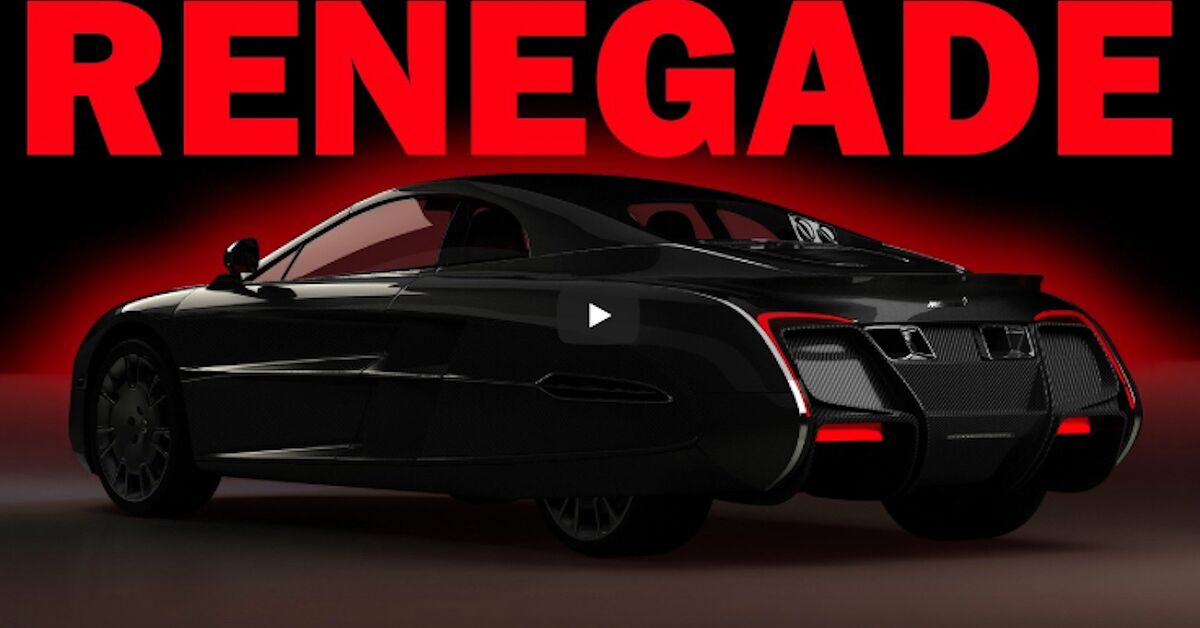
In the world of bespoke supercars, there are special editions, there are limited editions, and then there are true one-offs.Cars created not by marketing departments or racing regulations, but by a single wealthy customer with a vision and enough money to turn imagination into carbon fiber reality.And the McLaren X-1 is one of the latter.
Report: GM Allegedly Pumping The Breaks On Full-Size EVs Connie Peters Drives The 2026 Ford Explorer Tremor Chinese Vehicle Content Rules Forcing Polestar Out of U.S. Next Year See Edits News Blog McLaren Podcasts NEW!. McLaren X-1: The One-Off Supercar That Ignored Everything McLaren Stood For by Chris VS Cars | TTAC Creator (IC: ) Published: September 9th, 2026 Share In the world of bespoke supercars, there are special editions, there are limited editions, and then there are true one-offs. Cars created not by marketing departments or racing regulations, but by a single wealthy customer with a vision and enough money to turn imagination into carbon fiber reality. And the McLaren X-1 is one of the latter.
Unveiled in 2012 at the prestigious Pebble Beach Concours weekend in California, the X-1 remains one of the most unusual cars ever to wear a McLaren badge. It wasn’t designed to set lap records. It wasn’t built to celebrate a racing victory. It wasn’t even intended to showcase the future of McLaren design.
Instead, it was built because one anonymous client looked at the company’s first modern road car, the MP4-12C, and essentially said, “I love the engineering. Now throw away the body and start again.” The result was a machine unlike anything else on the road. A car that mixed twenty-first-century carbon-fiber technology with styling inspiration taken from some of the most elegant automobiles of the 20th century. It was a McLaren that looked nothing like a McLaren. And that was entirely the point.
The X-1 was based mechanically on the McLaren MP4-12C, which debuted in 2011 as McLaren Automotive’s first modern production supercar. While the 12C was praised for its carbon-fiber construction, powerful engine, and handling, its styling was sometimes viewed as overly clinical and engineering-focused. The X-1 customer’s request was essentially to retain the engineering while completely reimagining the exterior.
McLaren Special Operations (MSO) took on the project, which required nearly three years of development. The goal was a car with timeless elegance rather than the aggressive, futuristic appearance common among contemporary supercars. A design competition was held, with the winning proposal coming from McLaren designer Hong Yu, a Korean-born graduate of the Royal College of Art.
The customer provided a list of historic cars that influenced the design, including the Facel Vega HK500, Chrysler D’Elegance, Buick Electra, Mercedes-Benz 540K and Citroën SM. Although these vehicles came from different eras and countries, the transcript identifies a common characteristic: they had strong visual presence and stood apart from ordinary automobiles.
That philosophy resulted in a McLaren unlike any other. The X-1 stretched the proportions of the 12C, becoming longer, wider and visually lower. Its most distinctive feature was a pair of bright metal rails running from the front toward the rear, an element specifically requested by the customer. Covered front wheel arches and dramatic rear fins reinforced its resemblance to classic luxury and coachbuilt automobiles.
The interior received a similarly extensive transformation. The standard 12C cabin was upgraded with red Nappa leather, nickel-coated aluminum bezels, carbon-fiber trim with a titanium weave, and special carpets. The result was intended to feel more like a luxurious lounge than a conventional supercar cockpit, reflecting the owner’s preference for elegance over aggression.
Despite its radically different bodywork, the X-1 retained the fundamental mechanical package of the MP4-12C. It used McLaren’s 3.8-liter twin-turbocharged V8, producing approximately 592 horsepower and 600 Nm of torque, paired with a dual-clutch transmission. The transcript notes that official performance figures were never really the focus of the project. Importantly, the X-1 was fully road legal and drivable, rather than merely being a static show car.
The X-1 did not introduce a new McLaren design language or directly influence subsequent production models. Instead, its importance comes from its status as a genuinely singular automobile: one customer, one design and one interpretation of what a McLaren could look like.
Why It Matters
McLaren X-1: The One-Off Supercar That Ignored Everything McLaren Stood For by Chris VS Cars | TTAC Creator (IC: ) Published: September 9th, 2026 Share In the world of bespoke supercars, there are special editions, there are limited editions, and then there are true one-offs.
CarMotion Daily’s Take
Next Year See Edits News Blog McLaren Podcasts NEW!. Watch this space over the coming weeks. Electric momentum is uneven across the industry, and moves like this reshape how buyers compare EV lineups. Range, charging speed, and price still dominate EV shopping — every new entry forces competitors to either match or reposition. Watch for EPA range certifications and DC fast-charge benchmarks once independent tests land. Pricing tiers, software updates, and any regional trim adjustments will tell us how serious the launch intent is.
📝 Source & Copyright Notice
This story was first reported by TTAC. For the full article with original photography and complete coverage, visit the source: Read the full story at TTAC →