The Story
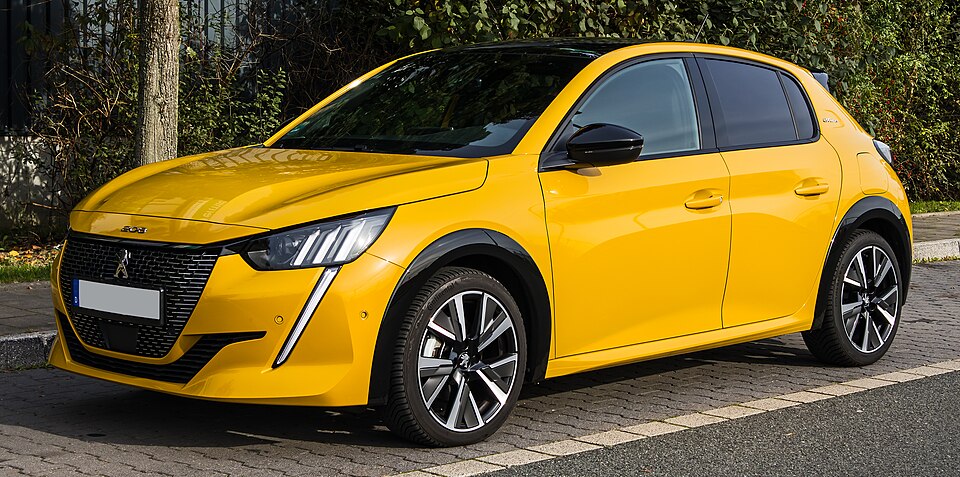
After a six year hiatus, Peugeot has revived GTi with a modern take on its iconic hot 208. We find out if has the same spark as its predecessor with a first drive in Scotland.
RRPfrom £34,995Great design, strong power, responsive chassis Uninspiring sound, ageing cabin, range It’s been six years since the Peugeot 208 GTi was discontinued, and in that time we haven’t seen a single product from Peugeot with the iconic nameplate. They haven't even stuck it on one of their many SUVs. Now, thankfully, it’s finally back and on a hot hatch, but in typical 2026 style, it comes exclusively in all-electric form. The question is, does that detract from the Peugeot GTi character we’ve come to love and set a benchmark for so many?.
While the badge might be new, the underpinnings are not, because underpinning the new e-208 GTi is the same Perfo-eCMP platform that you'll find under the Abarth 600e, Alfa Romeo Junior Veloce and most recently, the Vauxhall Corsa GSE. You’ll be pleased to hear though, that while the fundamentals are carried across, calibration, software and some significant pieces of hardware are unique to the 208 GTi, all in pursuit of that trademark ‘GTi spirit,’ according to the people at Peugeot.
A sole ‘M4+’ motor mounted between the front wheels provides a generous 277bhp and 254lb ft of torque, making it a match for its Stellantis relatives and significantly more powerful than even the range-topping 217bhp Alpine A290 GTS. Better still, the Peugeot gets a real mechanical Torsen limited-slip differential, something the Alpine goes without.
To power it all is a 51kWh battery to sit in-line with the rest of its rivals at this price point, capable of offering up to 234 miles on a charge if you’re gentle with your throttle inputs. Before you’ve even set off though, you can slice 15 miles from that WLTP range estimate by ignoring the more efficient no-cost option Hankook tyres. Michelin Pilot Sport 4S tyres are standard-fit, but they sacrifice efficiency and low road noise for performance and are a good indicator of just how seriously Peugeot has taken its latest GTi project. Maximum charging speed stands at a modest 100kw, a match for the Alpine.
Speaking to the man behind the 208’s transformation, Peugeot GTi chief engineer Christophe Auriault, evo got to grips with exactly how it differs to the cars with which it shares a platform. The changes to the cooling system are most notable, with a larger coolant pump and radiator designed to increase longevity on track, on the rare occasion you find yourself on one in this car. The springs, dampers (with hydraulic bump stops) and chunky 31mm rear anti-roll bar are unique too.
A handful of changes have been made to the 208 GTi's geometry in order to make it more playful and ‘GTi’ in its dynamic character too, with a bespoke machined part used to alter rear toe for this purpose. Steering is calibrated to be ultra-responsive in-line with its small, thin-rimmed steering wheel, with ESC also calibrated to allow for more freedom as you approach its limits, although you can’t turn the system off completely.
The 208 GTi is quick, perhaps quicker than you’d expect based on its sub-300bhp output and 182bhp/ton, which is on a par with the last petrol engined 208 GTi. Consider its 1546kg weight figure and that becomes even more of a surprise, as that puts this little hot hatch just 114kg behind an Alfa Romeo Giulia Quadrifoglio on the scales. That’s batteries for you.
To reach 62mph from a standstill will take you just 5.5sec, nine tenths quicker than the Alpine A290 and four tenths ahead of Mini’s JCW Electric. Many EVs scrabble for traction off the line, especially in wet conditions, but when the Michelin tyres are fitted the GTi finds purchase without issue on just about any surface you throw at it, the well-measured throttle calibration making it nigh on impossible to throw all of the power at the front wheels in instant like some EVs. Just don’t expect much more than 2.5mi/kWh if you're liberal with the right pedal.
This carries through to traction on corner exit, with the alert, tenacious front end allowing you to promptly find your line, before that differential gets to work putting all 254lb ft where it’s needed most. Just like the other models that use this platform, the action of the differential is front and centre, with the wheel twitching in your hands as the front tyres find traction. There’s both torque and bump steer on occasion too, and while these are typically traits you look to avoid, it does give the GTi some old school charm.
There are three driving modes accessible via the (awkwardly placed) rocker in the centre console: Eco, Normal and Sport. Eco and Normal do what you’d expect, and while Sport adds more response and reduces ESC intervention, it also disengages regenerative braking entirely. This leaves you with only the hydraulic braking system, which normally highlights if the regenerative braking muddies pedal feel, but the reality here is that lifting off results in zero deceleration. It's an odd sensation, one that feels like you have popped the car into neutral and are feee-wheeling. Combine this with a lack of response from the top of the pedal and you quickly find yourself pressing ‘B’ on the shifter to re-engage regenerative braking.
A consequence of its high weight figure is that the 208 GTi has a taut ride. At low speeds and on typically British surfaces you can find yourself bouncing out of the seat, but those hydraulic bump stops help mitigate the very worst impacts. Increase the speed on the right roads and it becomes more resolved and within itself, with those high spring rates resulting in a keen response. You won’t go long without a reminder that this isn’t the c1000kg hot hatch it’s inspired by, with its mass taking just that little bit longer to settle when you’re pushing on, but there’s no doubt it’s fun.
There is one elephant in the room with this latest generation to where he 208 GTI name though, and it’s the lack of virtual gears. GTi chief engineer Auriault said: ‘Our priority on this project was the performance. I have a small budget, not enough to make everything,’ when asked if it was ever a consideration. 'Conventional’ single-speed drive it is. There’s a synthesised sound to go with it all that's a little one-dimensional and uninspiring next to some rivals, but it's a useful reference point for speed regardless. Perhaps we’ll get virtual gears in the next car.
Why It Matters
RRPfrom £34,995Great design, strong power, responsive chassis Uninspiring sound, ageing cabin, range It’s been six years since the Peugeot 208 GTi was discontinued, and in that time we haven’t seen a single product from Peugeot with the iconic nameplate.
CarMotion Daily’s Take
To reach 62mph from a standstill will take you just 5.5sec, nine tenths quicker than the Alpine A290 and four tenths ahead of Mini’s JCW Electric. Watch this space over the coming weeks. Electric momentum is uneven across the industry, and moves like this reshape how buyers compare EV lineups. Range, charging speed, and price still dominate EV shopping — every new entry forces competitors to either match or reposition. Watch for EPA range certifications and DC fast-charge benchmarks once independent tests land. Pricing tiers, software updates, and any regional trim adjustments will tell us how serious the launch intent is.
📝 Source & Copyright Notice
This story was first reported by Evo-GN. For the full article with original photography and complete coverage, visit the source: Read the full story at Evo-GN →