The Story
Independent tests confirm Donut’s potentially game-changing battery. Potentially.
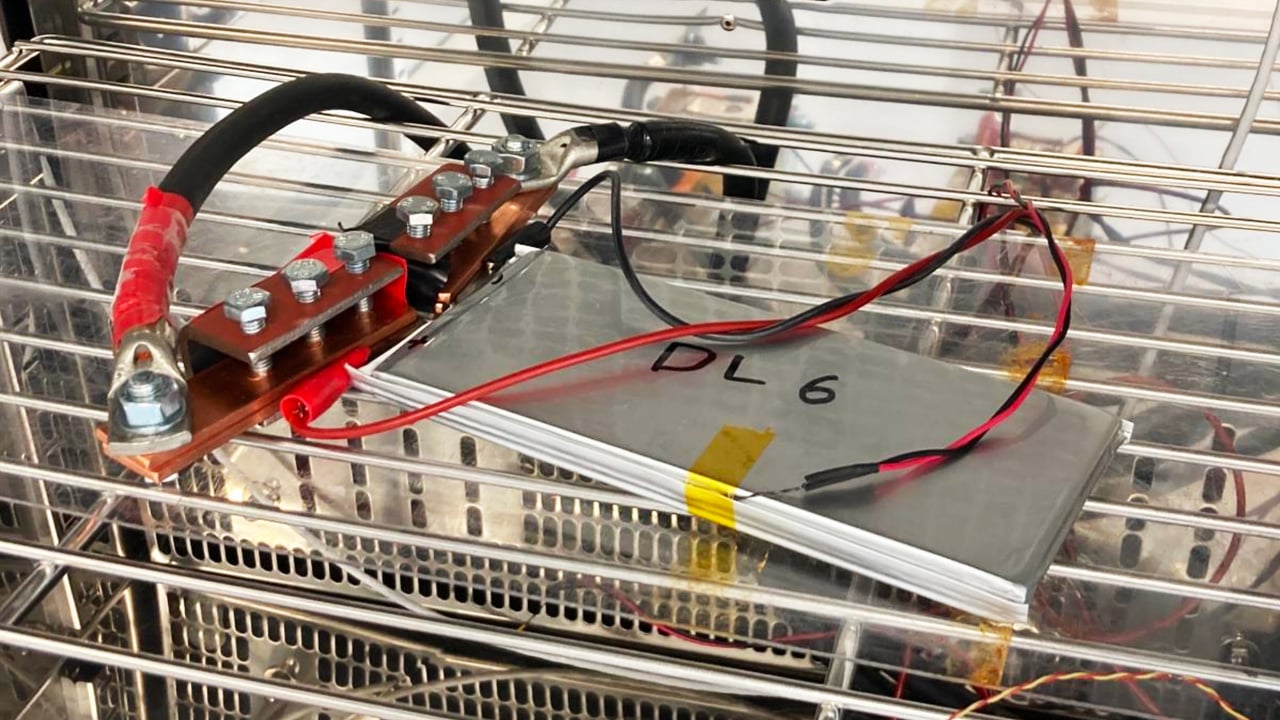
Independent tests confirm Donut’s potentially game-changing battery. Potentially. Published: 02 Sep 2026 External link to Top Gear Magazine Subscription – 3 months for £6Skip 1 photos in the image carousel and continue readingTurn on Javascript to see all the available pictures.The buzz continues around Donut Lab’s solid state battery. So does the controversy. Today the Finnish/Estonian company announced test results by the Finnish state lab VTT for its cell’s energy density: 409Wh per kilo. That’s about half as much again as an average lithium-ion cell, or put another way two-thirds the battery mass for a given storage capacity.
And remember the earlier claim of 0-80 per cent charge in under five minutes. So if it works according to the claims, you’ll have an electric car battery that weighs far less than today’s for a given range, and charges faster.
To be specific, that 409Wh/kg figure is at the cell level. It’s what you’d get for a battery in, say, gadgets or drones, where it’ll likely see its first uses. In a car it would need surrounding structure, copper to wire all the cells together, and liquid cooling.
But because it’s claimed to be so robust against heat – that’s one of the great advantages of solid-state – the cooling can be simpler and lighter than in a conventional gel-cell lithium-ion battery.
“We are targeting 350Wh/kg at the pack level,” Donut Lab’s CEO Marko Lehtimäki tells TopGear.com. That would mean a 500kg battery would have a capacity of 175kWh, vastly better than today’s cars.
Donut Labs has previously shown results for its cell showing performance stability at 80 degrees C. In another test, after physical damage it still performed, although not at full capacity, but didn’t catch fire. And it doesn’t swell and shrink during charge and discharge as much as other solid-state designs, so Donut claims it doesn’t need their weighty physical clamping.
Robust?. Lehtimäki tells TopGear.com it can last 5,000 cycles when rapid-charged in this way even to 90 per cent capacity and beyond. If it’s charged and discharged more gently, at more moderate temperatures, for example in grid energy storage, then he says 100,000 cycles would be possible.
Further, Lehtimäki repeats to Top Gear his earlier claim that there’s no lithium or cobalt in the cells. Global supplies of these minerals are almost entirely processed in China, making battery production highly geopolitically vulnerable. He insists the minerals the Donut battery uses are instead cheap and available anywhere. “We could make all the batteries that the UK needs, in the UK, from materials out of UK, without any new mines.”.
The claims keep coming. Conventional battery cell factories demand medical-level dust-free environments. Lehtimäki says Donut’s cells don’t. “That means we can build these in brownfield facilities. Nothing will explode or whatever, and we wouldn’t need special toxic or materials handling. We don’t need clean rooms.”.
I ask Lehtimäki what is in the cells, if not today’s standard lithium and critical minerals. He refuses to say. Global giants have been chasing the Holy Grail of solid-state batteries for many years. So, he says, Donut needs to keep its recipe secret. “As a small company, we need to protect every bit of our intellectual property at application level, structure level, manufacturing level.”.
Huge Chinese companies, and others backed by Daimler and VW and Rimac, haven’t yet got solid-state cells into production. Nor Nissan’s or Toyota’s own efforts. Donut is a tiny company, just 70 people including those working on the hubless in-wheel motor that gave the company its name. Even if taking cell tech from an external partner in Germany, it’s amazing that they have achieved such a breakthrough… if they actually have.
Why It Matters
Independent tests confirm Donut’s potentially game-changing battery.
CarMotion Daily’s Take
There’s no doubt mystery will surround the Donut battery for some time. Watch this space over the coming weeks. Electric momentum is uneven across the industry, and moves like this reshape how buyers compare EV lineups. Range, charging speed, and price still dominate EV shopping — every new entry forces competitors to either match or reposition. Watch for EPA range certifications and DC fast-charge benchmarks once independent tests land. Pricing tiers, software updates, and any regional trim adjustments will tell us how serious the launch intent is.
📝 Source & Copyright Notice
This story was first reported by TopGear. For the full article with original photography and complete coverage, visit the source: Read the full story at TopGear →