The Story
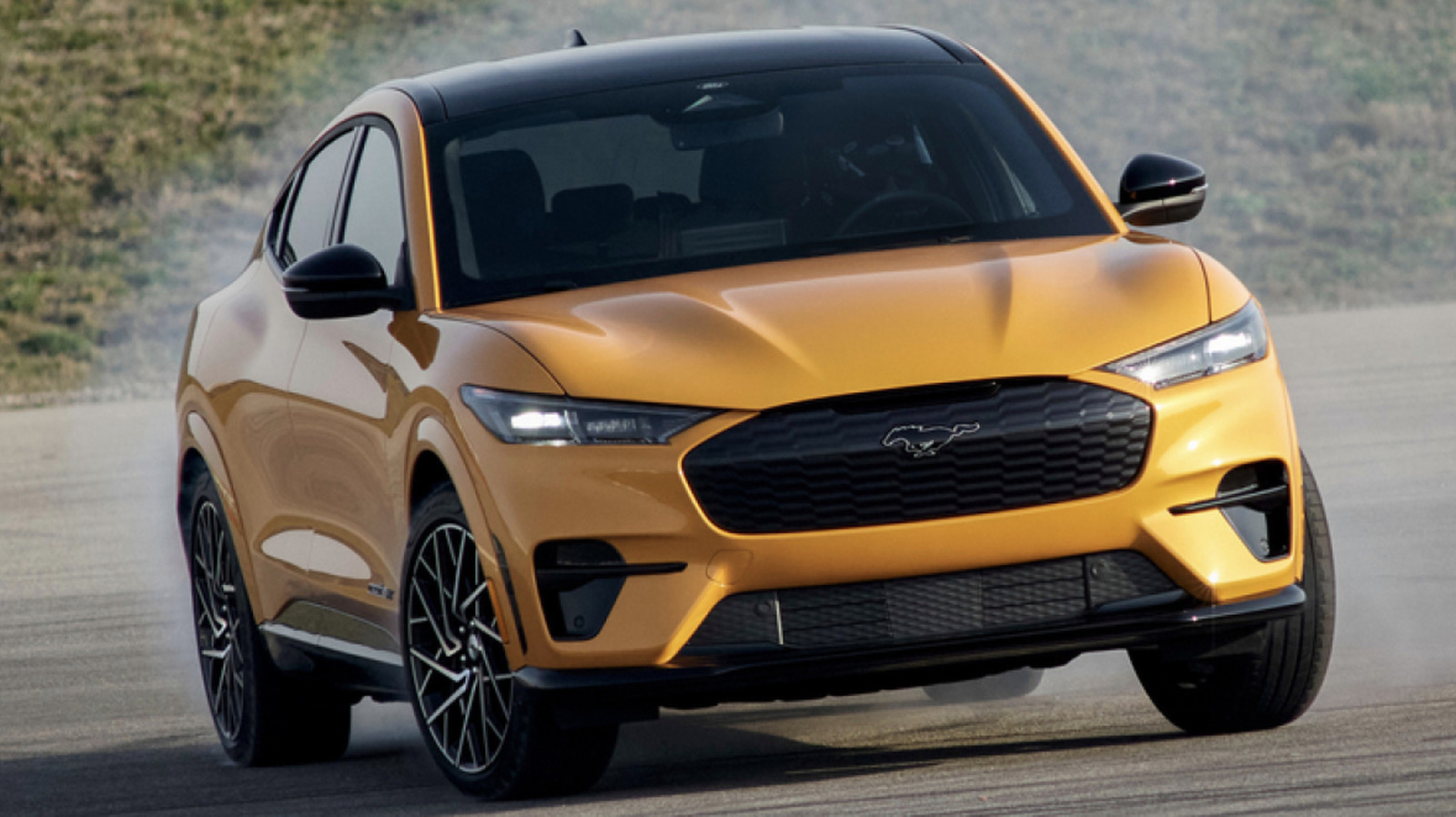
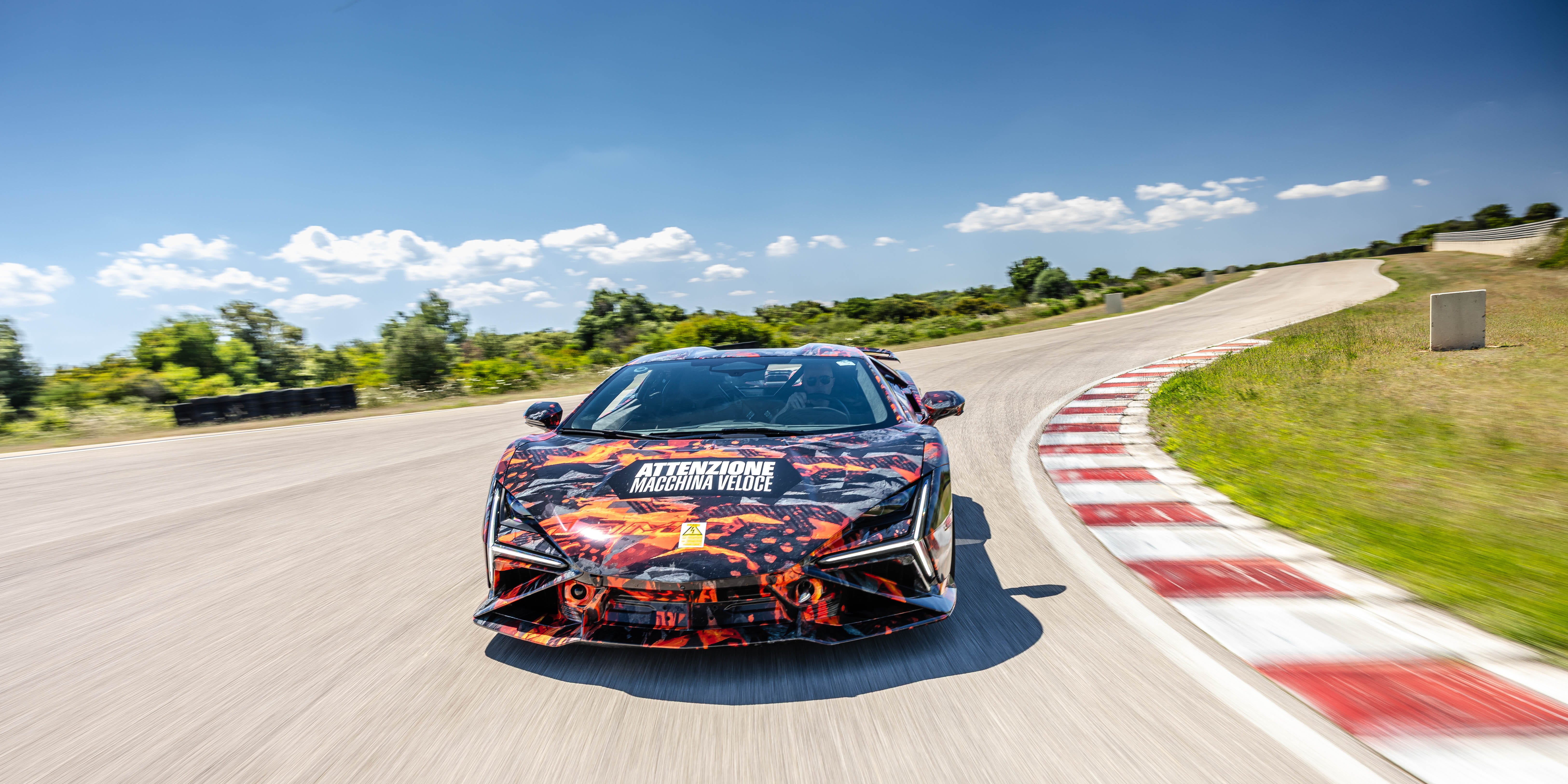
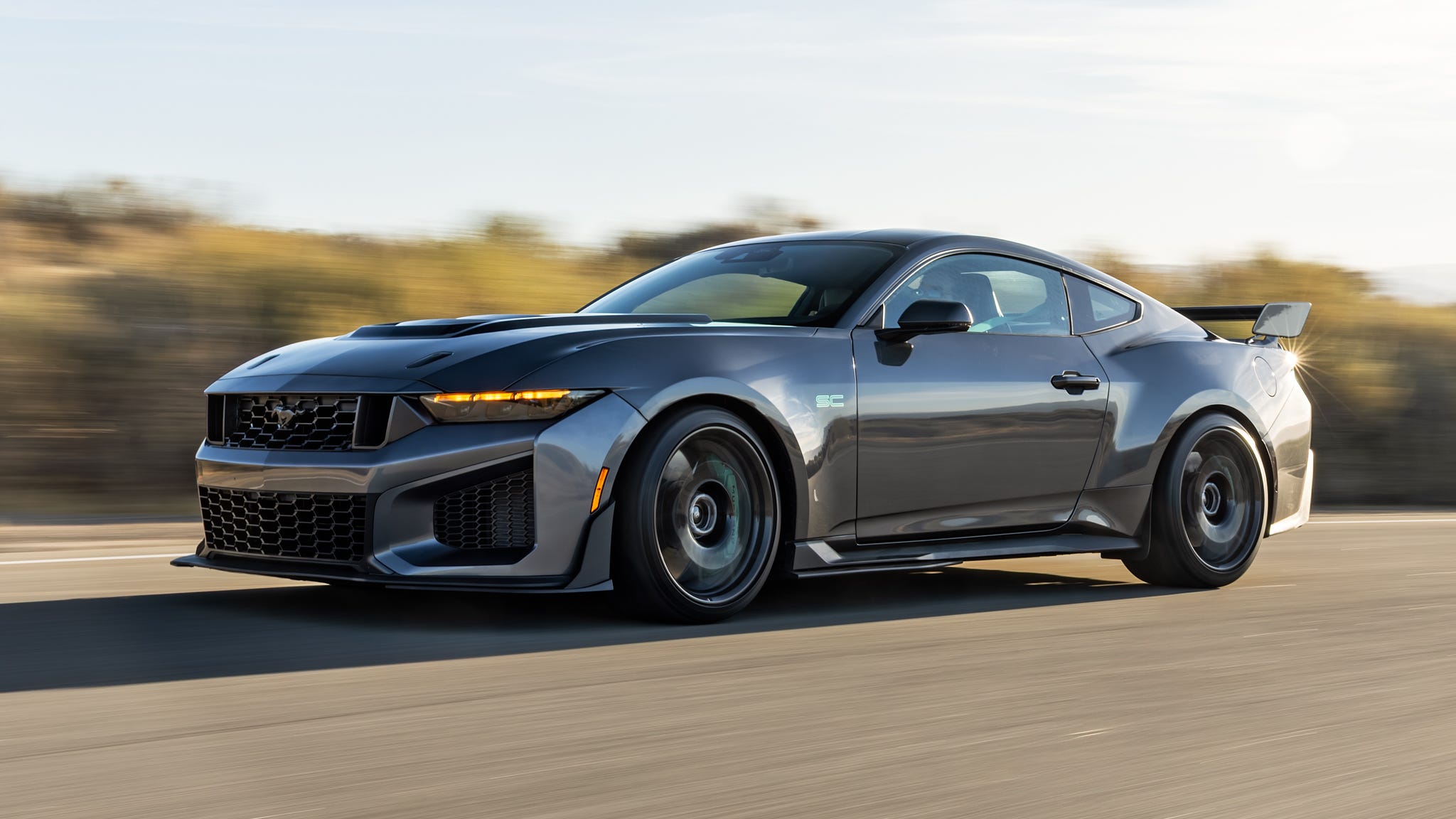
The 795-hp 2026 Ford Mustang Dark Horse SC hits 60 mph in 2.9 seconds and outruns the Shelby GT500 in MotorTrend testing.
If you thought the Dark Horse SC was just a reheated Shelby GT500, it turns out you were wrong. If you’re one of the internet haters who called the 2026 Ford Mustang Dark Horse SC a warmed-over version of the 2020–2022 Shelby GT500, well, hope you like the taste of crow. We just ran our instrumented testing on Ford’s new, 795-hp supercharged muscle car and the numbers reveal that the Dark Horse SC is no GT500. It is way, way quicker.
We’ll get straight to the point (for more in-depth details about the car, read our First Drive story here). The Dark Horse SC hammered from 0 to 60 mph in 2.9 seconds. It punched past 100 mph in 6.2 seconds. Then it blasted through the quarter mile in 10.8 seconds at 131.8 mph. The quickest 2020 Ford Mustang Shelby GT500 we ever tested needed 3.6, 7.0, and 11.3 seconds, respectively, to hit those marks. Sayonara, Shelby!.
The supercharged Dark Horse trails close behind the uber Mustang, the 815-hp GTD. In MotorTrend testing, that $330,000 pony car rocketed to 60 mph in 2.7 seconds and cleared the quarter mile in 10.5 seconds at 134.9 mph. The sorry state of the American muscle car means that the Dark Horse SC currently has no direct competitor from Chevy or Dodge, but it does stack up quite nicely against the 2027 Chevrolet Corvette Grand Sport that we just tested. Chevy’s mid-engine sports car (which makes 260 fewer horsepower) gets the jump with a 2.7-second 0–60 run, but the Ford eventually muscles ahead to beat the ’Vette by 0.2 second in the quarter mile. Check out the full acceleration testing results for the Mustang Dark Horse SC, the GTD, and the 2020 Shelby GT500 with the Carbon-Fiber Track package in the chart below.
There is, of course, more than an ounce of truth in the initial criticism of the Dark Horse SC. It does reuse a lot of the Shelby GT500’s hardware and it’s not obvious from the spec sheet alone that the Dark Horse would be so much quicker. The Predator V-8 in the new car does get a power bump from 760 to 795 hp, but that would typically only be good for about 0.3 second, so how do we explain the gargantuan performance leap?.
Well, the GT500 never had a proper launch control system. Getting the seven-speed dual-clutch transmission to unleash the 5.2-liter V-8’s fury without bogging or doing a spectacular burnout required a 631-word explanation in our first test. Between then and now, Ford engineers figured out how to make their horse jump out of the gate. The process in the SC is simple. Toggle into Drag Strip mode via the steering-wheel-mounted buttons, then activate launch control on the center touchscreen. The system defaults to 2,500 rpm, but unless you’re launching on a sticky, prepped drag strip, you’ll need to lower it. We landed on 1,600 rpm—one tick above the lowest possible setting—for the quickest getaway. Stand on both pedals, give the engine a second to stabilize at your chosen rpm, then release the brake and hold on. The Dark Horse takes off with a chirp of its tires and a bawdy V-8 roar.
Our test car was helped off the line by Michelin Pilot Sport Cup 2 R tires tuned specifically by Ford Racing and the low inertia of its carbon-fiber wheels. Both of those are part of the $36,500 Track package. The optional go-fast/turn-hard/stop-short kit ensures that the Dark Horse SC is no one-trick pony. It also posted meaningful gains in MotorTrend’s braking and handling test. You can check out the full test numbers and driving impressions of the 2026 Ford Mustang Dark Horse SC in our First Test.
Get the newest car reviews, hottest auto news, and expert analysis of the latest trends delivered straight to your inbox!. Eric TingwallI fell in love with car magazines during sixth-grade silent reading time and soon realized that the editors were being paid to drive a never-ending parade of new cars and write stories about their experiences. Could any job be better?. The answer was obvious to 11-year-old me. By the time I reached high school, becoming an automotive journalist wasn’t just a distant dream, it was a goal. I joined the school newspaper and weaseled my way into media days at the Detroit auto show. With a new driver’s license in my wallet, I cold-called MotorTrend’s Detroit editor, who graciously agreed to an informational interview and then gave me the advice that set me on the path to where I am today. Get an engineering degree and learn to write, he said, and everything else would fall into place. I left nothing to chance and majored in both mechanical engineering and journalism at Michigan State, where a J-school prof warned I’d become a “one-note writer” if I kept turning in stories about cars for every assignment. That sounded just fine by me, so I talked my way into GM’s Lansing Grand River Assembly plant for my next story. My child-like obsession with cars started to pay off soon after. In 2007, I won an essay contest to fly to the Frankfurt auto show and drive the Saturn Astra with some of the same writers I had been reading since sixth grade. Winning that contest launched my career. I wrote for Jalopnik and Edmunds, interned at Automobile, finished school, and turned down an engineering job with Honda for full-time employment with Automobile. In the years since, I’ve written for Car and Driver, The New York Times, and now, coming full circle, MotorTrend. It has been a dream. A big chunk of this job is exactly what it looks like: playing with cars. I’m happiest when the work involves affordable sporty hatchbacks, expensive sports cars, manual transmissions, or any technology that requires I learn something to understand how it works, but I’m not picky. If it moves under its own power, I’ll drive it.
Why It Matters
Get the newest car reviews, hottest auto news, and expert analysis of the latest trends delivered straight to your inbox!.
CarMotion Daily’s Take
If you’re one of the internet haters who called the 2026 Ford Mustang Dark Horse SC a warmed-over version of the 2020–2022 Shelby GT500, well, hope you like the taste of crow. The detail bears tracking. Markets rarely reward single announcements — execution over the next two to four quarters is what closes the gap between press release and customer. How this lands depends less on the announcement itself and more on the rollout, dealer support, and after-sales story behind it. Specifics on pricing, availability, and regional rollout will tell us whether this moves from headline to delivery. Independent verification and follow-up coverage from rival outlets tend to firm up the picture within days.
📝 Source & Copyright Notice
This story was first reported by MotorTrend. For the full article with original photography and complete coverage, visit the source: Read the full story at MotorTrend →