The Story
There are concept cars that look unrealistic because they are clearly made of cardboard, optimism, and lighting tricks.Then there are concept cars that look unrealistic because they are simply too good to be true.The BMW Nazca belongs in the second group.
Report: GM Allegedly Pumping The Breaks On Full-Size EVs Connie Peters Drives The 2026 Ford Explorer Tremor Chinese Vehicle Content Rules Forcing Polestar Out of U.S. Next Year See Edits News Blog BMW Podcasts NEW!. BMW Nazca: The V12-Powered Carbon Fiber Supercar BMW Almost Built by Chris VS Cars | TTAC Creator (IC: ) Published: September 30th, 2026 Share There are concept cars that look unrealistic because they are clearly made of cardboard, optimism, and lighting tricks. Then there are concept cars that look unrealistic because they are simply too good to be true. BMW Nazca belongs in the second group.
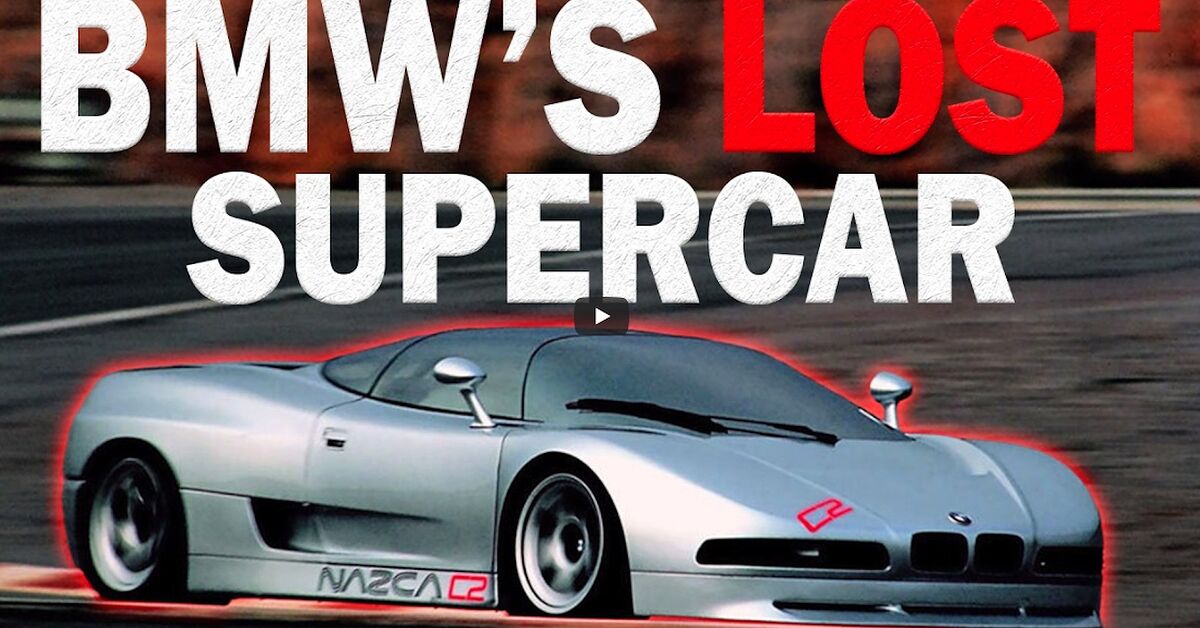
The Nazca had a carbon-fiber body. It had a mid-mounted BMW V12. It had styling from Italdesign. It had gullwing-style glass sections, Group C racing influences, a drag coefficient that would shame many modern supercars, and a shape so low and dramatic it looked less like a BMW and more like something smuggled out of a Le Mans pit garage at three in the morning.
And yet, somehow, it never made production. Which is both understandable and deeply annoying. Because for a brief period in the early 1990s, BMW had something truly extraordinary sitting right in front of it. Not another executive saloon. Not another sensible grand tourer. Not another car for people called Klaus who enjoy discussing suspension bushing durability at dinner parties.
This was a genuine midengined supercar. A spiritual successor to the M1. A machine that could have stood beside the Ferrari 512 TR, Lamborghini Diablo, Bugatti EB110, and Jaguar XJ220 without needing to apologize for being German.
The story begins at the 1991 Tokyo Motor Show, where Italdesign unveiled the BMW Nazca M12, designed by Fabrizio Giugiaro, son of legendary designer Giorgetto Giugiaro. The Nazca was inspired partly by Italdesign’s earlier Bugatti ID90 concept but took that idea in a much more aggressive, motorsport-oriented direction. Its styling incorporated Group C racing influences, with an extremely low nose, long body, dramatic glasshouse and wide rear haunches.
Aerodynamics were a major part of the design. Tested in BMW’s wind tunnel, the Nazca reportedly achieved a 0.26 drag coefficient, impressive for a mid-engine supercar concept from 1991.
The construction was equally ambitious. The Nazca used carbon fiber extensively in both its body and structure, helping keep its weight extremely low at roughly 1,100 kg. The front section and engine cover were each molded as single pieces of carbon fiber. At a time when carbon fiber was still largely associated with top-level motorsport, this represented highly advanced construction.
Power came from BMW’s 5.0-liter V12, derived from the 850i. In standard form it produced around 295 horsepower. While that wasn’t extraordinary by supercar standards, the Nazca’s exceptionally low weight gave the engine considerably more potential than it had in the much heavier 8 Series. The engine was mounted behind the occupants and displayed beneath a glass engine cover.
In 1992, Italdesign introduced the Nazca C2, an evolution of the M12 rather than simply a facelift. The front end was redesigned, with the headlights moved beside the BMW kidney grille, giving the car a more recognizable BMW identity.
Why It Matters
BMW Nazca: The V12-Powered Carbon Fiber Supercar BMW Almost Built by Chris VS Cars | TTAC Creator (IC: ) Published: September 30th, 2026 Share There are concept cars that look unrealistic because they are clearly made of cardboard, optimism, and lighting tricks.
CarMotion Daily’s Take
The lasting appeal of the Nazca is precisely that it demonstrated what BMW could have done in the 1990s: a dramatic, lightweight, Italian-designed, German-engineered V12 supercar that might have stood alongside the Ferrari and Lamborghini icons of the period. Watch this space over the coming weeks. Markets rarely reward single announcements — execution over the next two to four quarters is what closes the gap between press release and customer. How this lands depends less on the announcement itself and more on the rollout, dealer support, and after-sales story behind it. Specifics on pricing, availability, and regional rollout will tell us whether this moves from headline to delivery. Independent verification and follow-up coverage from rival outlets tend to firm up the picture within days.
📝 Source & Copyright Notice
This story was first reported by TTAC. For the full article with original photography and complete coverage, visit the source: Read the full story at TTAC →