The Story
We drive Polaris’s hottest buggy to view southern Utah in fast forward.
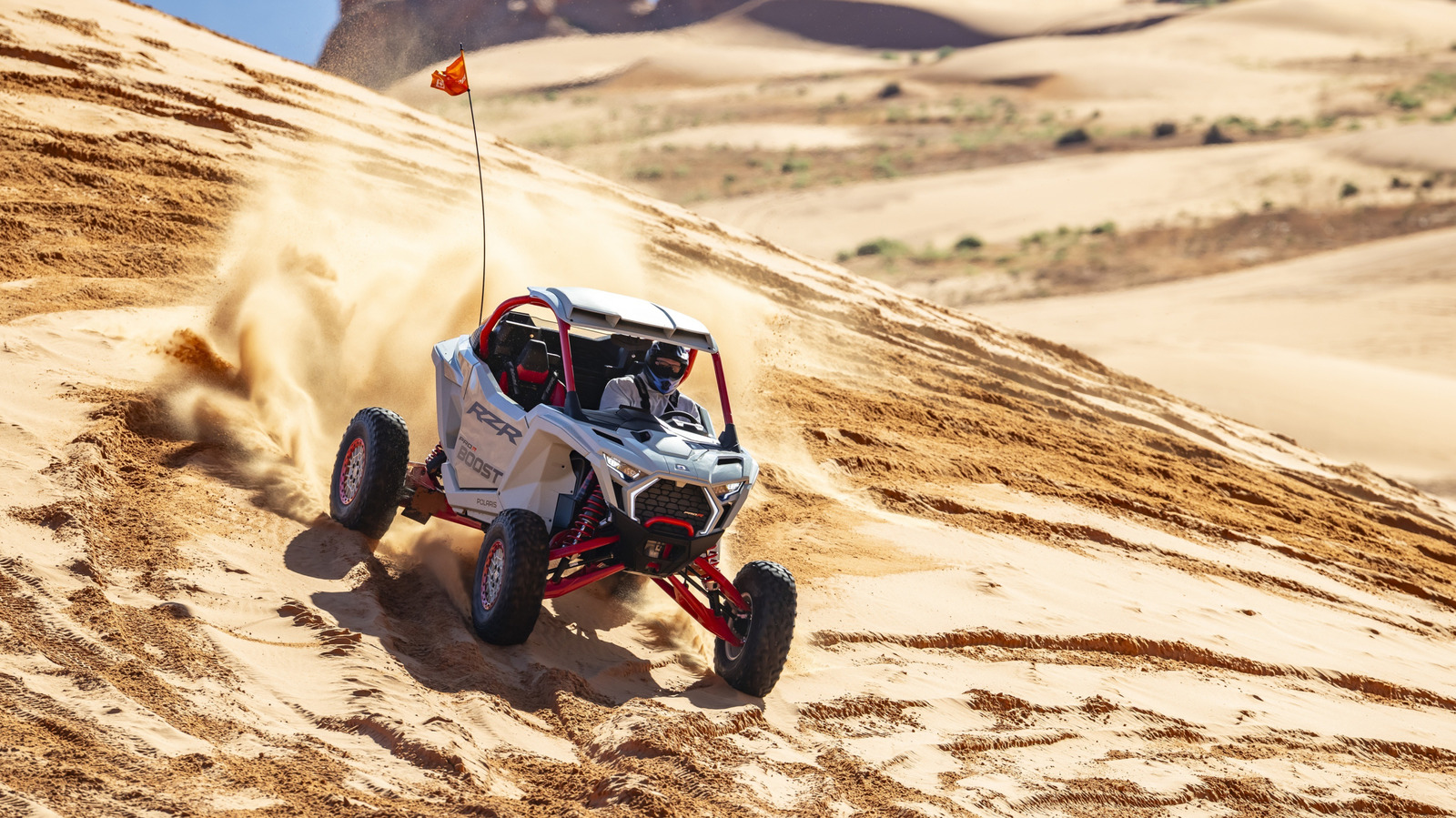
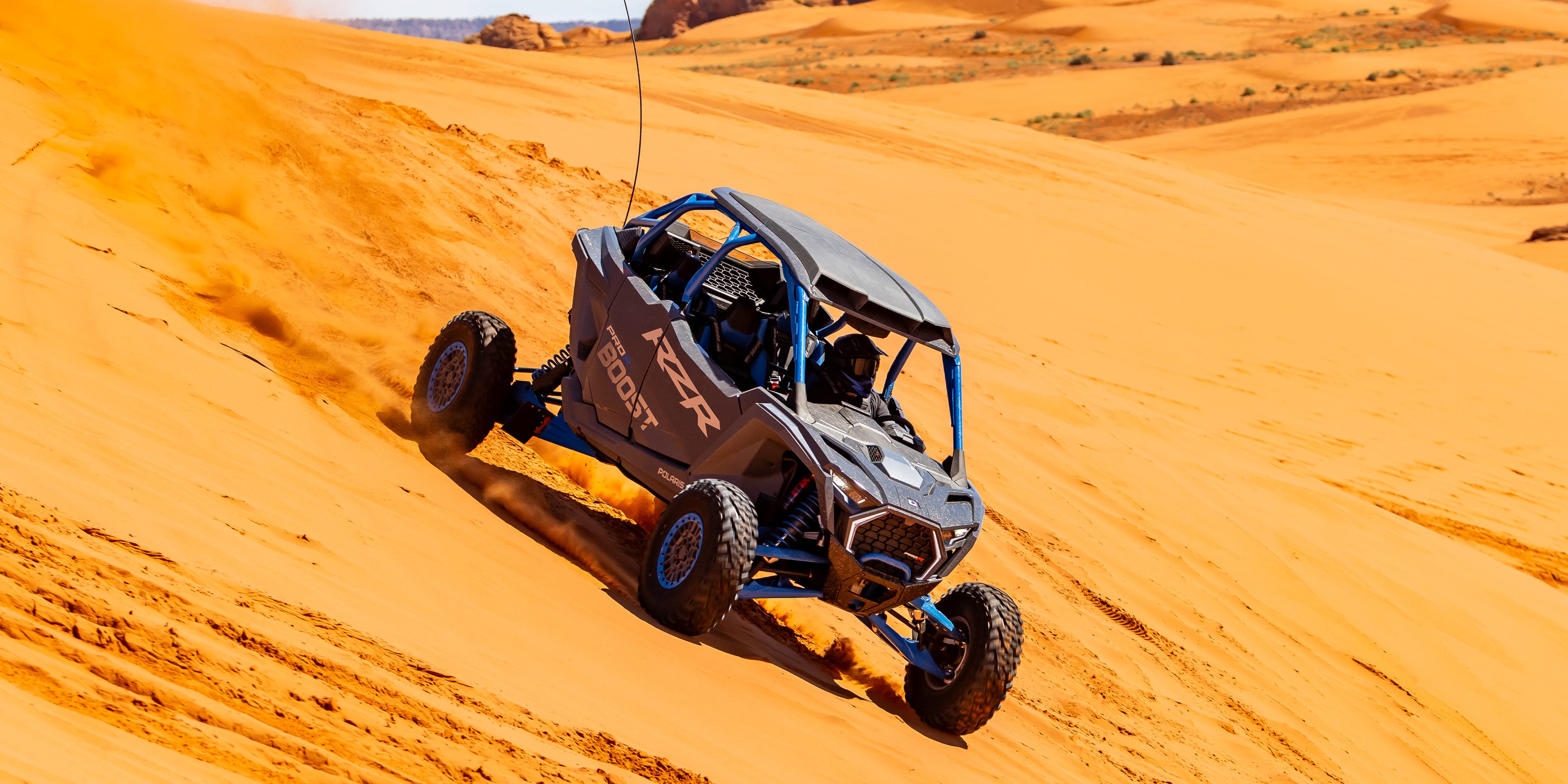
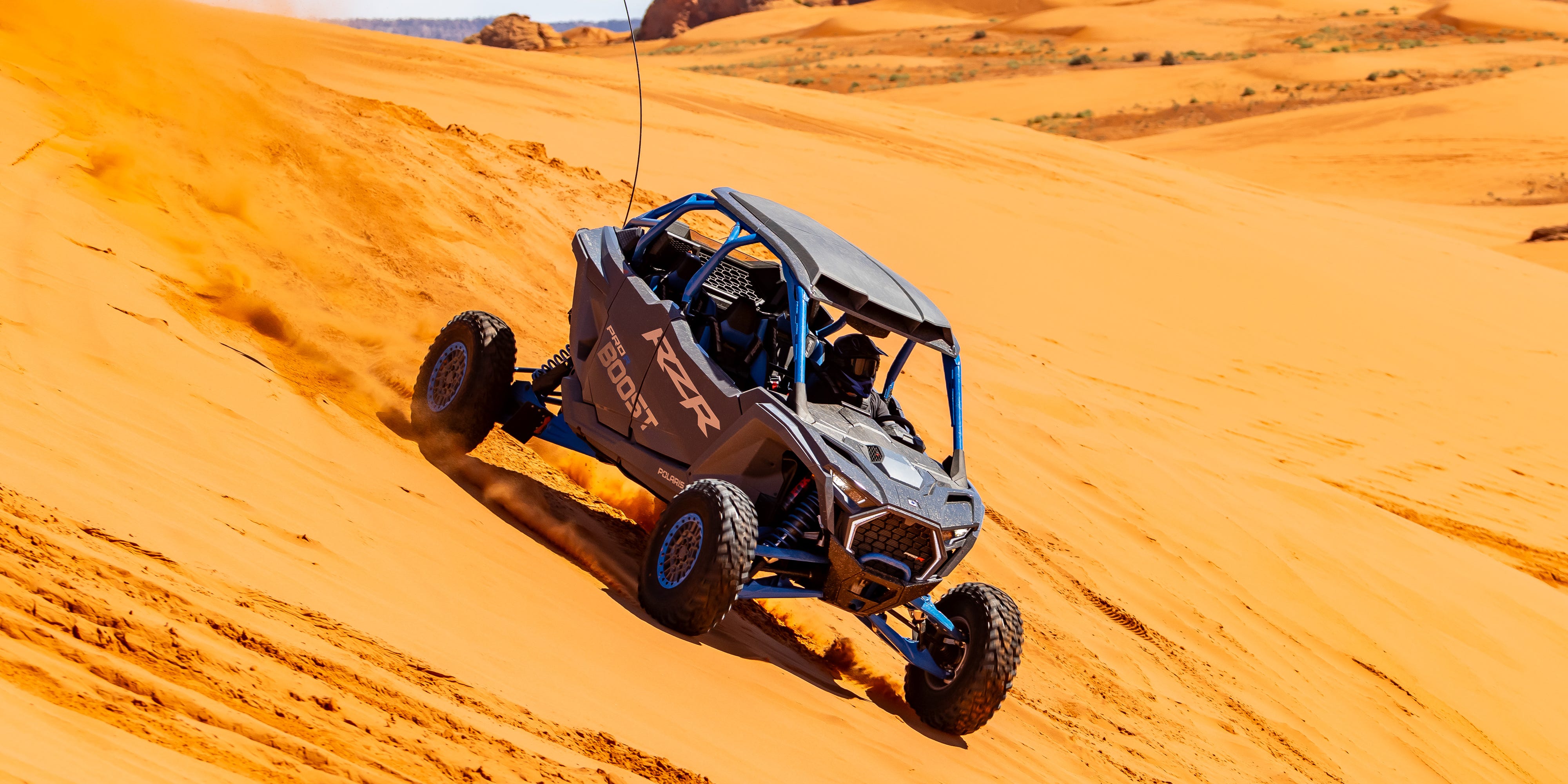
Polaris’s newest world-blurring buggy is the RZR Pro R Boost. Available in a two-seat configuration starting at $51,994 or a four-seat for $55,994, this 275-hp behemoth is the king of the mountain. Or the sand dune. Maybe even a steep rock wall.
Building off the existing Pro R platform, Polaris massaged most of its bones. The DOHC 2.0-liter inline-four now has different internals to handle the pressure administered by the large 60-mm turbo that’s become the life of the party. The 275 horses make this the most powerful buggy available, topping the Can-Am Maverick R’s 240 horsepower and the Kawasaki Teryx H2’s 250 ponies. The competition cannot come close to its 223 pound-feet of torque. Polaris says the Pro R Boost will even make all its muscle in temperatures of up to 115 degrees and at elevations of 10,000 feet.
Downstream, the clutches that make up the continuously variable automatic transmission (CVT) are tuned specifically for the Boost. The secondary clutch is larger with more cooling fins, the drive belt and half-shafts are stronger, and the front differential is beefier.
Out in Utah’s Sand Mountain off-road area, opportunities to heat things up run rampant. Sand dunes rise and flow like the waves of a sunburnt sea, and fast two-track trails littered with moguls deep enough to swallow a Geo Metro beg the Boost for forgiveness. But the Boost, cushioned by adaptive Fox Live Valve dampers with electronic controls for compression and rebound that adjust up to 200 times per second, shows no mercy. In fact, it likes fast and faster to stay on top of the bumps.
Of the four damper modes (Comfort, Rock, Baja, and Track), the Comfort setting is best for nearly all situations. Should your eyes detect a devastating impact on the horizon that could potentially threaten the roughly two feet of front and rear wheel travel, and your spine, a button on the steering wheel temporarily puts the dampers into the firmest mode to absorb the blow. (For an additional $3000, Ultra models come equipped with adaptive anti-roll-bar links that we did not get to experience.).
Can-Am’s dual-clutch automatic is the more engaging piece of equipment in this segment, but the Boost’s CVT is a performer. There’s a smidge of lag as the turbo initially spools up, but overall, the power delivery is very linear. Three air intakes keep the drive belt cool when the turbo four is wide open. In moments of on-off throttle, the Boost stays responsive. Instead of blowing off leftover boost with hisses and whooshes, Polaris uses the residual pressure to keep the big turbo spinning to reduce lag.
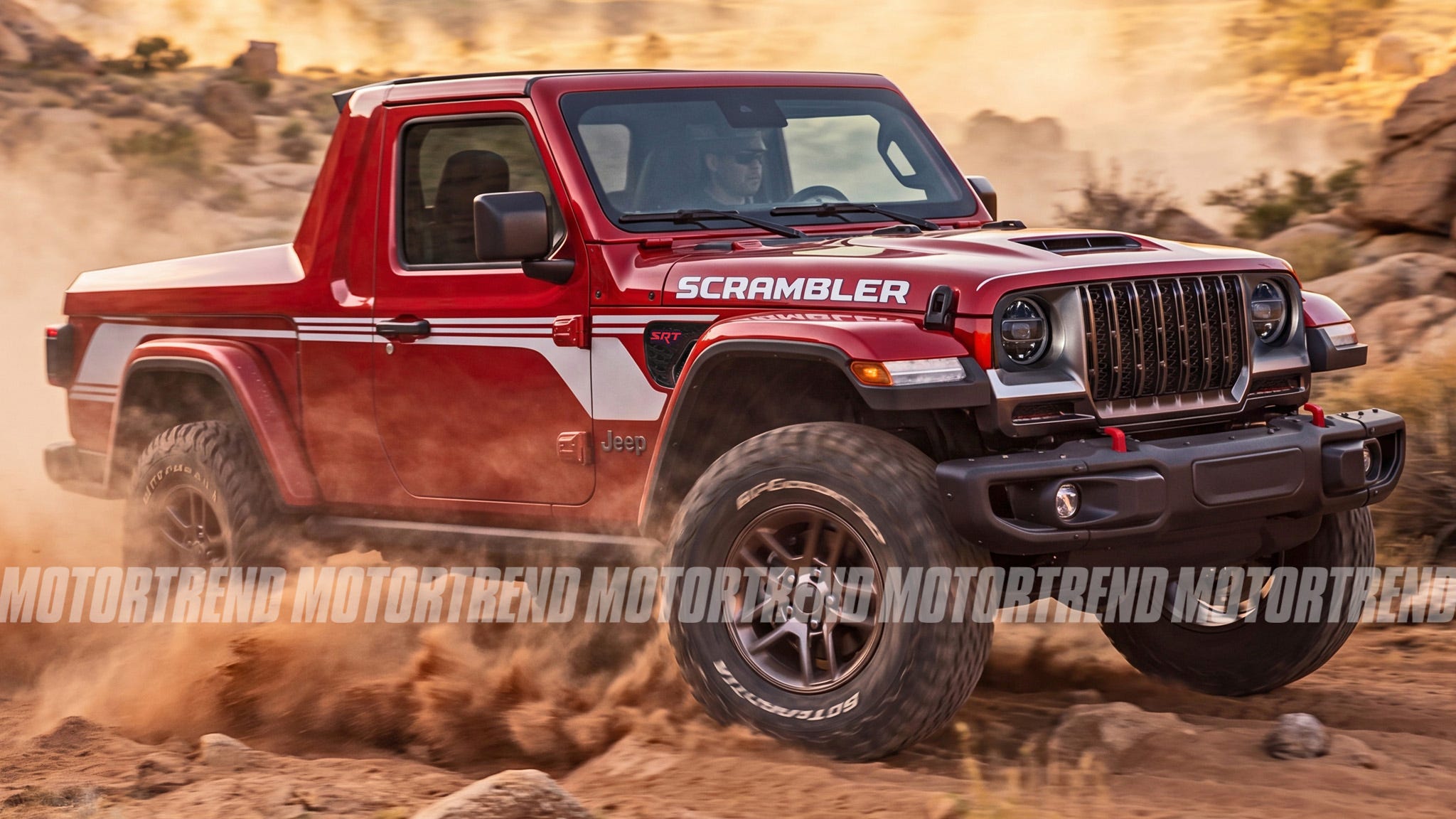
But whereas the Bronco and Wrangler creep and crawl up rock faces, the RZR Pro R Boost treats these technical surfaces like a vertical road. With the tires pushed to the outermost corners, it’s as if the approach and departure angles are infinite. A toggle switch transforms the drivetrain from rear- to four-wheel drive, then goes a step further by locking the front differential. The throttle inputs are numbed in Rock mode, and low range is dialed in for low-speed maneuvers. Even when the Boost comes to a complete stop on a near-vertical rock, its low-end torque gets the rig moving again with zero drama. It’s truly impressive how quickly these buggies tackle terrain that looks like the surface of Mars.
When you reach some of the highest elevations in the Sand Mountain recreation area, you can cool off in the ventilated seats, track your buddies via the Group Ride feature in the 10.4-inch touchscreen, and use Apple CarPlay to crank up some tunes through the banging Rockford Fosgate stereo. Then, you can finally take in the scenery. Because, like southern Utah, the capabilities of the RZR Pro R Boost are beautiful.
2027 Polaris RZR Pro R Boost Vehicle Type: mid-engine, rear/4-wheel-drive, 2- or 4-passenger, 2- or 4-door buggy. PRICE Base: Ultimate two-seat, $51,994; Ultimate four-seat, $55,994; Ultra two-seat, $54,994; Ultra four-seat, $58,994.
Why It Matters
But whereas the Bronco and Wrangler creep and crawl up rock faces, the RZR Pro R Boost treats these technical surfaces like a vertical road.
CarMotion Daily’s Take
Polaris says the Pro R Boost will even make all its muscle in temperatures of up to 115 degrees and at elevations of 10,000 feet. Watch this space over the coming weeks. Supply chains, regulations, and consumer demand are reshaping the playbook faster than five-year plans can keep up. Dealer networks and service capacity will need to evolve alongside whatever the headline announcement implies. Regulatory filings, supplier contracts, and any production-volume adjustments usually trail the headline by a quarter or two. Stock price moves and dealer council chatter are leading indicators worth monitoring.
📝 Source & Copyright Notice
This story was first reported by CarAndDriver. For the full article with original photography and complete coverage, visit the source: Read the full story at CarAndDriver →