The Story
The used-car bias against high-odometer readings has a well-worn logic behind it: more miles mean more wear, and more wear means more repair bills waiting to ambush the next owner.However, a new study suggests that instinct, developed over decades of gasoline-powered vehicle ownership, may steer you wrong when the car in question runs on electrons.
Report: GM Allegedly Pumping The Breaks On Full-Size EVs Connie Peters Drives The 2026 Ford Explorer Tremor Chinese Vehicle Content Rules Forcing Polestar Out of U.S. Next Year See Edits News Blog Electric vehicles Studies & Reports 1.5K Views The Six-Figure EV Might Outlast Your Gas Car by TTAC News Staff (IC: ) Published: September 24th, 2026 Share The used-car bias against high-odometer readings has a well-worn logic behind it: more miles mean more wear, and more wear means more repair bills waiting to ambush the next owner. However, a new study suggests that instinct, developed over decades of gasoline-powered vehicle ownership, may steer you wrong when the car in question runs on electrons.
The British Vehicle Rental and Leasing Association (BVRLA) recently conducted a large study of vehicle inspection records and found that high-mileage electric cars fail their roadworthiness tests less often than equivalent petrol cars, which turns the usual advice on its head. The short version, if you are shopping used: a six-figure odometer reading on an EV is not the red flag it would be on an internal-combustion car. The BVRLA-commissioned study says a six-figure odometer alone is no reason to write off an EV — a conclusion the association is careful to confine to the UK, where the data comes from.
An MOT is a safety inspection covering the braking system, suspension, tires, and the rest of a car’s safety-related hardware. It does not, however, measure battery capacity or degradation, which means battery health sits entirely outside the scope of the study. This is the single largest caveat in the whole exercise. The finding is about whether a car passes a safety inspection, not about how much range remains in its pack. Anyone conflating “durable” with “still has full range” is reading more into the numbers than they support.
The work was carried out by the transport research organization New AutoMotive on behalf of the BVRLA, and the two versions of a given model — one electric, one gasoline — were compared directly wherever both existed. On that basis, the electric versions typically equalled or bettered the gasoline ones.
Early in a car’s life, powertrain barely matters. The study saw little separating EVs from gas-powered cars in the early years, and at lower mileages the failure rates track closely once you account for age and distance. If you were expecting a durability chasm from mile one, there is not one.
The divergence starts later. After roughly 40,000 miles the failure-rate gap began to open up for electric cars. Push past around 60,000 miles and EV failure rates level off at approximately 16 percent, while petrol and diesel cars keep climbing. By the time both are carrying serious mileage, the difference is stark. Among cars aged three to eight years with 90,000 to 120,000 miles, 16.5 percent of EVs failed against 22.1 percent of petrol cars. Framed as a ratio, EVs in that band failed roughly a quarter less often.
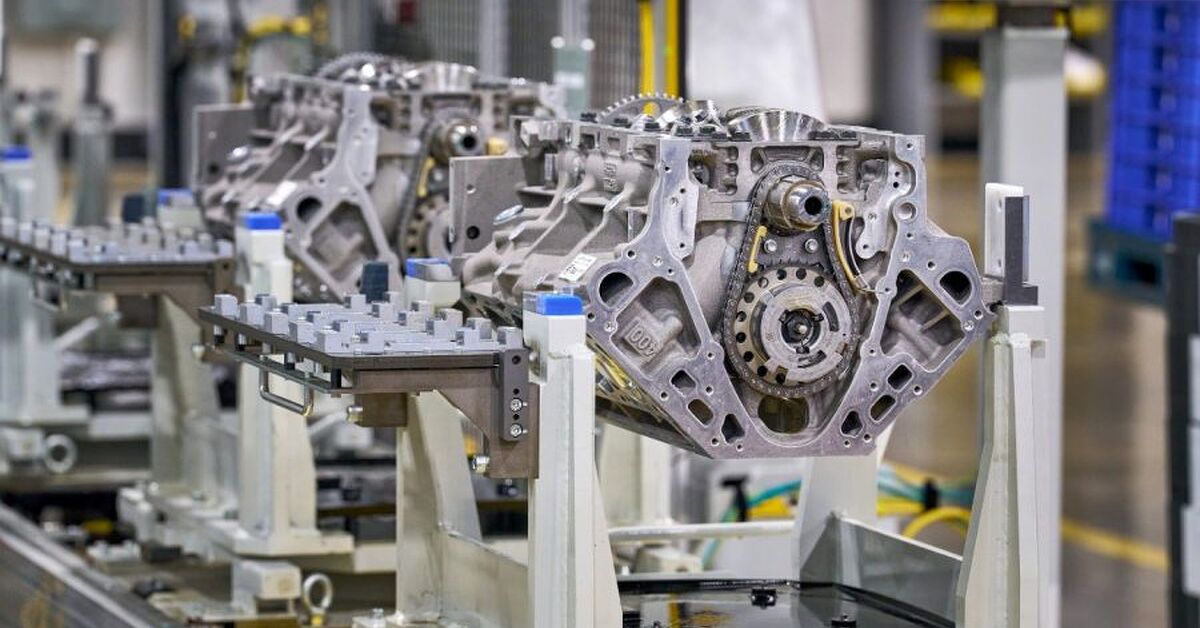
The explanation the researchers offered is not exotic. They credited most of the edge to the comparative mechanical simplicity of an electric drivetrain. An electric motor and a single-speed reduction gear replace an engine, a multi-speed transmission, and the long list of components that wear out around them. Electric drivetrains eliminate many of the parts that wear over time in combustion vehicles, so there is simply less to fail.
That simplicity shows up in running costs as well as inspection pass rates. EV owners tend to see lower maintenance costs, and the numbers behind that are concrete. Argonne National Laboratory pegs maintenance at six cents per mile for battery-electric vehicles versus ten cents per mile for internal-combustion vehicles. Fewer moving parts, fewer fluids, fewer scheduled services.
Electric cars are not immune to the inspection sheet, and the study was candid about where they slip. EVs recorded significantly more tire wear than gasoline vehicles, and the researchers put that down to the added weight of the battery packs. A heavier car works its tires harder. If you are budgeting for a used EV, assume tires will be a more frequent line item than they would be on the petrol equivalent.
There is a second quirk, and it is counterintuitive. The study found older, low-mileage electric cars turning up brake faults more often. The likely cause is regenerative braking reducing how often the conventional brakes are used, which lets them rust from disuse. The friction brakes fail not from wear but from neglect. A car that barely touches its brake pads can corrode them, which is the opposite of the failure mode gasoline drivers are trained to watch for.
Why It Matters
Next Year See Edits News Blog Electric vehicles Studies & Reports 1.5K Views The Six-Figure EV Might Outlast Your Gas Car by TTAC News Staff (IC: ) Published: September 24th, 2026 Share The used-car bias against high-odometer readings has a well-worn logic behind it: more miles mean more wear, and more wear means more repair bills waiting to ambush the next owner.
CarMotion Daily’s Take
The British Vehicle Rental and Leasing Association (BVRLA) recently conducted a large study of vehicle inspection records and found that high-mileage electric cars fail their roadworthiness tests less often than equivalent petrol cars, which turns the usual advice on its head. The detail bears tracking. Electric momentum is uneven across the industry, and moves like this reshape how buyers compare EV lineups. Range, charging speed, and price still dominate EV shopping — every new entry forces competitors to either match or reposition. Watch for EPA range certifications and DC fast-charge benchmarks once independent tests land. Pricing tiers, software updates, and any regional trim adjustments will tell us how serious the launch intent is.
📝 Source & Copyright Notice
This story was first reported by TTAC. For the full article with original photography and complete coverage, visit the source: Read the full story at TTAC →